India Gate Delhi Decorative Line Art: Integrating High-Contrast Vectors into Professional Design Workflows
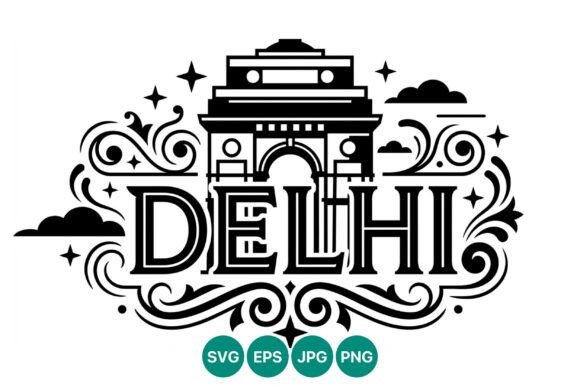
In the landscape of modern graphic design, the demand for assets that balance cultural specificity with technical versatility is higher than ever. India Gate Delhi Decorative Line Art represents a niche yet powerful resource for designers, marketers, and content creators who need to evoke the grandeur of New Delhi without relying on photorealistic imagery that can clutter a layout. This specific asset—a black and white vector line art featuring the iconic India Gate, accompanied by the word "Delhi" in bold serif letters and surrounded by ornamental swirls and clouds—offers more than just aesthetic appeal. It provides a structural foundation for branding, editorial design, and merchandise production.
Understanding how to integrate this type of artwork into your existing workflow requires a shift from viewing digital assets as mere decorations to treating them as functional components of a broader design system. Whether you are a freelancer preparing a travel blog header, a small business owner creating packaging for souvenir items, or an educator developing cultural study materials, the utility of this line art depends on its format, scalability, and ease of manipulation.
The Strategic Value of Vector-Based Cultural Icons
The primary advantage of using India Gate Delhi Decorative Line Art lies in its vector nature. Unlike raster images (such as standard JPEGs or PNGs) which are composed of pixels and lose quality when enlarged, vector files like SVG and EPS are built on mathematical paths. This distinction is critical for professional implementation. When you download a ZIP folder containing SVG, PNG, JPG, and EPS files, you are acquiring a multi-format toolkit designed for cross-platform compatibility.
For professionals working in print media, the EPS file is indispensable. It ensures that the high-contrast lines remain sharp whether printed on a business card or a large-format banner. The 100% vector construction guarantees that there are no jagged edges or pixelation, maintaining a premium look that reflects well on your brand or publication. For web developers and UI designers, the SVG format offers lightweight scalability, allowing the icon to load quickly while remaining crisp on high-resolution Retina displays and mobile devices.
Pre-Production: Preparation and Asset Organization
Effective use of any digital asset begins before it is placed into a design canvas. Proper preparation saves time during the execution phase and prevents common technical issues. When you acquire the India Gate Delhi Decorative Line Art package, the first step should be organization. Create a dedicated folder in your project directory for assets. Unzip the downloaded folder and review the contents. You will typically find:
- SVG: Ideal for web use, CSS styling, and modern design software like Figma or Sketch.
- EPS: The standard for Adobe Illustrator and professional print workflows.
- PNG: Useful for quick previews or platforms that do not support vector formats, featuring transparency.
- JPG: Best for immediate use in documents or social media posts where transparency is not required.
Before importing the file into your main project, open the SVG or EPS in your preferred vector editor. Check the layers. High-quality line art should have clean paths with no unnecessary anchor points. Verify that the bold serif text spelling "Delhi" is either outlined or uses a widely available font to avoid substitution errors when sharing files with clients or printers. This quality control step ensures that the ornamental swirls and clouds align correctly with the central monument structure, preserving the intended visual balance.
Integration During the Design Process
Once the asset is prepared, its integration into your workflow depends on the specific medium. The black and white high-contrast style of this artwork makes it exceptionally versatile. It acts as a neutral base that can adapt to various color palettes without clashing. Here is how you can apply it across different scenarios:
Branding and Identity Systems
For businesses operating in the tourism, hospitality, or cultural sectors in Delhi, this line art can serve as a core element of a logo or brand mark. The ornamental swirls add a touch of elegance and tradition, while the bold serif typography conveys stability and authority. You can recolor the vector elements to match your brand guidelines. Because it is a vector, you can isolate the India Gate structure from the text if needed, creating a flexible icon system for social media avatars or app icons.
Editorial and Content Marketing
Bloggers and publishers often struggle to find unique header images that do not look like generic stock photography. Using this decorative line art allows for a sophisticated, minimalist aesthetic. Place the artwork against a solid background or overlay it on a subtle texture. The high contrast ensures readability even when scaled down for thumbnail images. Furthermore, the vector format allows you to animate the drawing process using CSS or JavaScript for interactive web experiences, engaging users as the lines of the monument draw themselves onto the screen.
Merchandise and Product Design
Entrepreneurs selling print-on-demand products such as t-shirts, tote bags, or mugs benefit significantly from the EPS format. Print providers require high-resolution vectors to ensure the ink lays down cleanly on fabric or ceramic. The simplicity of the black and white design reduces printing costs, as it often requires only one color screen or pass. The ornamental clouds and swirls provide enough detail to make the product visually interesting without requiring complex, multi-color printing processes.
Post-Production and Long-Term Usability
The lifecycle of a design asset does not end with the final export. Maintaining a library of reusable, high-quality vectors like India Gate Delhi Decorative Line Art contributes to long-term operational efficiency. By storing these files in a centralized digital asset management (DAM) system or a well-organized cloud drive, you reduce the time spent searching for resources in future projects.
Consider the consistency this asset brings to a series of related materials. If you are creating a travel guide series for different Indian cities, using a consistent line art style for each landmark creates a cohesive visual identity. The Delhi piece becomes part of a larger narrative, helping audiences instantly recognize the brand’s visual language. This consistency builds trust and professionalism, key components of E-E-A-T (Experience, Expertise, Authoritativeness, and Trustworthiness) in content creation.
Technical Considerations for Optimal Results
To maximize the potential of this artwork, keep the following technical tips in mind:
- Stroke Weight Consistency: When resizing the vector, ensure that the stroke weights remain proportional. Most modern vector software handles this automatically, but it is worth checking if you are scaling the image drastically.
- Color Accessibility: While the default is black and white, ensure that any color changes you make maintain sufficient contrast ratios for accessibility standards, especially if the text "Delhi" is used for informational purposes.
- File Size Optimization: For web use, optimize the SVG code. Remove any metadata or hidden layers that may have been included in the original file to keep load times minimal.
- Licensing Compliance: Always verify the license terms associated with the download. Ensure that your intended use—whether commercial or personal—is covered to avoid legal complications later in the workflow.
Conclusion: Elevating Workflow Efficiency with Quality Assets
Incorporating India Gate Delhi Decorative Line Art into your design toolkit is not just about adding an image; it is about streamlining your creative process. By leveraging the flexibility of vector formats, you eliminate the bottlenecks associated with low-resolution raster images. The inclusion of SVG, PNG, JPG, and EPS files in a single download ensures that you are prepared for any output requirement, from digital screens to large-scale print.
For professionals aged 20–50 who value efficiency and quality, this asset serves as a reliable building block. It allows you to focus on higher-level strategic decisions—such as layout composition, messaging, and user experience—rather than worrying about technical limitations of your graphics. By understanding how to prepare, integrate, and manage these files, you transform a simple decorative element into a powerful component of your professional workflow, delivering sharp, consistent, and culturally resonant designs every time.