Agra Taj Mahal Decorative Serif: Elevating Design with Iconic Vector Artwork
In the realm of digital design and print media, the fusion of cultural heritage with modern graphic standards creates a powerful visual language. The Agra Taj Mahal Decorative Serif represents more than just a font or an image; it is a comprehensive design asset that bridges historical elegance with contemporary versatility. For designers, educators, business owners, and hobbyists alike, understanding how to leverage high-contrast vector artwork featuring iconic landmarks can significantly enhance brand identity, educational materials, and creative projects. This article explores the technical and aesthetic dimensions of this specific artistic style, focusing on its application, file formats, and the strategic value of using scalable vector graphics in professional workflows.
The Aesthetic Power of Ornate Serif Lettering
Typography is the voice of visual communication. When dealing with themes rooted in history, tourism, or luxury, standard sans-serif fonts often fall short in conveying the necessary gravitas and atmosphere. The Agra Taj Mahal Decorative Serif utilizes ornate serif lettering to evoke a sense of timeless sophistication. Serifs, with their small lines or strokes attached to the end of a larger stroke in a letter, are traditionally associated with reliability, respect, and tradition. By adding decorative elements to these serifs, the typeface transcends mere readability to become an artistic element in its own right.
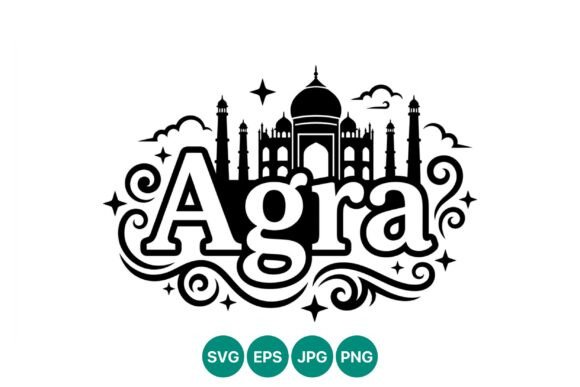
The inclusion of the word "Agra" in this stylized format immediately anchors the viewer in a specific geographical and cultural context. Agra, home to the Taj Mahal, is synonymous with Mughal architecture and intricate craftsmanship. The ornate nature of the lettering mirrors the detailed pietra dura (stone inlay) work found in the actual monument. This visual synergy ensures that the text does not just label the subject but embodies it. For branding purposes, this means that businesses in the travel, hospitality, or cultural education sectors can communicate their niche instantly without relying on excessive explanatory text.
Symbolism and Composition in Flat Design
The composition of this artwork goes beyond typography. It features the silhouette of the Taj Mahal above the lettering, accompanied by decorative swirls and stars. This arrangement is crafted in a flat design style, a minimalist approach that emphasizes usability and clean aesthetics. Flat design removes unnecessary three-dimensional effects such as gradients, shadows, and bevels, resulting in a crisp, modern look that loads quickly on digital platforms and prints clearly on various materials.
The silhouette of the Taj Mahal serves as an immediate visual identifier. Even without the text, the distinctive dome and minarets are globally recognized. Placing this silhouette above the ornate text creates a hierarchical balance, drawing the eye upward and then grounding it with the solid, decorative base of the typography. The decorative swirls and stars add a layer of whimsy and elegance, filling negative space and creating a cohesive unit rather than disjointed elements. These embellishments are not random; they reflect the floral and geometric motifs prevalent in Islamic art and Mughal architecture, ensuring cultural authenticity while maintaining a stylized, modern appeal.
The Technical Advantage of Vector Formats
One of the most critical aspects of this design asset is its delivery in vector formats, specifically SVG (Scalable Vector Graphics) and EPS (Encapsulated PostScript), alongside raster formats like PNG and JPG. For professionals and creators, the distinction between vector and raster is fundamental to quality control.
Vector graphics are defined by mathematical equations rather than pixels. This means that the Agra Taj Mahal Decorative Serif artwork can be scaled to any size—from a tiny favicon on a website to a massive billboard—without any loss of resolution or sharpness. This scalability is invaluable for businesses that need consistent branding across diverse mediums. A logo that looks crisp on a business card must also look impeccable on a company vehicle or a large banner. Raster images, such as standard JPGs or PNGs, become pixelated when enlarged, leading to unprofessional appearances. By utilizing the included SVG and EPS files, users ensure that their final output remains high-contrast and sharp, regardless of the dimensions required.
Understanding the File Package
The download typically includes a ZIP folder containing multiple file types, each serving a specific purpose in the design workflow:
- SVG: Ideal for web use. SVGs are code-based, making them lightweight and easily manipulable via CSS for interactive web designs. They render perfectly on retina displays and mobile devices.
- EPS: The industry standard for print. Professional printers and graphic designers prefer EPS files for importing into software like Adobe Illustrator or CorelDRAW. They maintain editability of layers and paths, allowing for color changes or minor adjustments before printing.
- PNG: Suitable for digital presentations and documents where transparency is needed. PNGs support transparent backgrounds, allowing the artwork to be overlaid on colored or textured backgrounds without a white box around it.
- JPG: Best for quick previews, social media posts, or situations where file size is a primary concern and transparency is not required.
Practical Applications Across Industries
The versatility of the Agra Taj Mahal Decorative Serif artwork allows it to be deployed across a wide spectrum of industries. Its high-contrast black and white nature makes it particularly adaptable, as it can be easily recolored or used as-is for a classic, monochromatic look.
Tourism and Hospitality
Travel agencies, tour operators, and hotels in Agra or those specializing in Indian heritage tours can use this artwork as a central element in their branding. It can serve as a logo, a watermark on promotional videos, or a header on brochures. The immediate recognition factor helps in building trust and setting expectations for the cultural experience being offered.
Educational Resources
Educators and publishers creating materials about world history, architecture, or geography can utilize this vector art to enhance textbooks, worksheets, and presentation slides. The clarity of the vector lines ensures that even when printed in black and white on standard paper, the details of the Taj Mahal silhouette and the ornate lettering remain distinct and legible. It serves as an engaging visual aid that captures student interest while maintaining academic professionalism.
Merchandise and Retail
For creators selling merchandise such as t-shirts, tote bags, mugs, or posters, the SVG and EPS files are indispensable. Print-on-demand services require high-resolution vector files to ensure that the design prints sharply on fabric and other materials. The flat design style translates well to screen printing and embroidery, reducing production costs associated with complex multi-color designs.
Digital Content Creation
Bloggers, vloggers, and social media influencers focusing on travel, culture, or design can use the PNG and JPG files for thumbnails, channel art, and post graphics. The aesthetic appeal of the ornate serif and iconic silhouette helps in creating a cohesive visual theme for their content, aiding in brand recognition among their audience.
Considerations for Effective Implementation
While the asset is designed for ease of use, several considerations can maximize its impact. First, contrast is key. Since the artwork is high-contrast black and white, it performs best against light or solid-colored backgrounds. Placing it over busy or low-contrast images may reduce legibility. Designers should consider adding a solid background box or adjusting the opacity of underlying images to ensure the artwork stands out.
Second, respect the cultural significance. The Taj Mahal is a UNESCO World Heritage site and a symbol of love and architectural brilliance. Using the artwork in a manner that is respectful and appropriate enhances the brand's reputation. Avoid associating the imagery with unrelated or controversial topics that might detract from its dignified appearance.
Finally, leverage the editability of vector files. While the default black and white scheme is elegant, brands may wish to align the artwork with their specific color palettes. Using software like Adobe Illustrator, designers can easily change the fill color of the SVG or EPS files to match brand guidelines, ensuring consistency across all marketing materials.
Conclusion
The Agra Taj Mahal Decorative Serif artwork is a testament to the power of combining cultural iconography with modern design principles. By offering a package that includes scalable vector formats alongside standard raster images, it provides a flexible tool for a diverse range of users. Whether for professional branding, educational enrichment, or creative expression, this asset offers a blend of aesthetic beauty and technical precision. Understanding its components, from the ornate typography to the flat design silhouette, allows creators to deploy it effectively, ensuring that their visual communications are both impactful and enduring. In an increasingly visual world, such high-quality, versatile design resources are essential for standing out and conveying messages with clarity and style.